
Access Blueprint Blog
Access Blueprint™ is a system for exploring how access, technology, policy, and human behavior interact inside complex organizations.
This blog is part of that system.

Designing for the Future Self Is a Change Management Problem
Most change initiatives fail for a simple reason: they assume people will remain capable in the same ways over time.
In reality, human capacity changes. Energy fluctuates. Attention narrows. Vision, mobility, and cognitive load shift. Disability, temporary or permanent, enters the picture gradually or suddenly.
When systems don’t account for this, the burden of adaptation falls on individuals rather than on design.
This pattern shows up across sectors.
Training delivered once and expected to last indefinitely.
Products that become harder to use the longer someone relies on them. Services that demand increasing effort as people’s capacity decreases.
These failures are rarely immediate. They appear slowly, through workarounds, disengagement, burnout, and quiet exclusion.
Designing for the future self reframes this problem at a systems level. It treats time as a core condition and continuity as a leadership responsibility. The question shifts from “Did we implement the change?” to “Can this be sustained by real people over time?”
This is where change management often breaks down.
Organizations optimize for launch, not maintenance. They measure adoption at a moment in time, not durability across years. Accessibility and inclusion are treated as requirements to satisfy, rather than conditions that shape how systems must be governed.
With accessibility regulation now in effect in multiple regions, organizations are being required to formalize what has long been true: systems must continue to work as people change.
Designing for the future self is not about predicting every scenario. It is about accepting human variability as a baseline condition and building systems resilient enough to accommodate it.
Across sectors, this shift is becoming unavoidable, not because it’s ethical, but because it’s operational.
From Sugarcane to Strategy: What Biogas Teaches Us About Complex Change
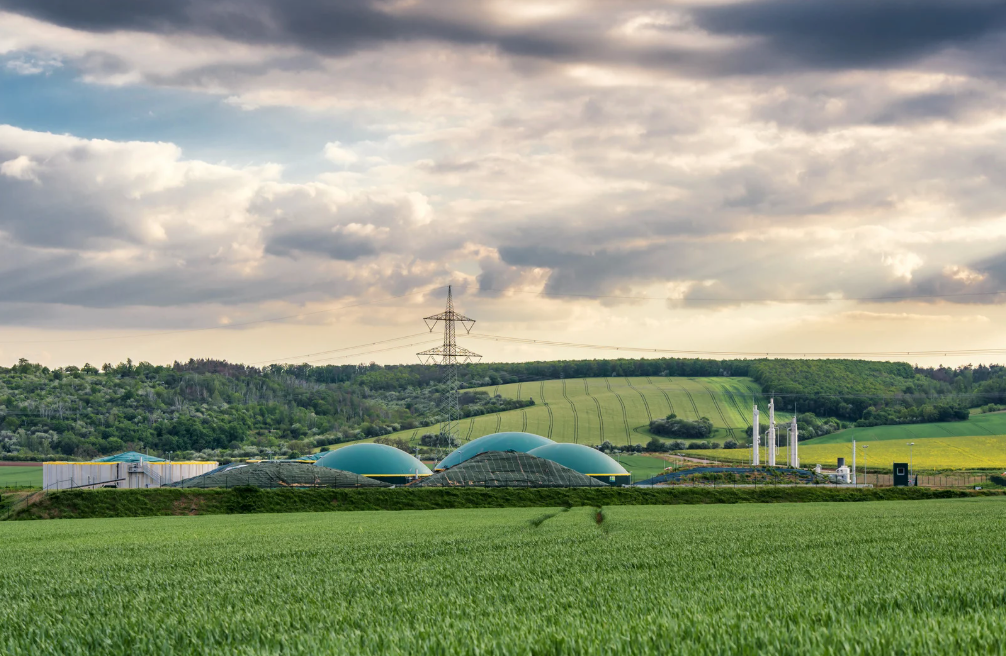
Most people rarely think about biogas, yet it plays a growing role in how economies function. Biogas is not a headline topic, but it sits inside one of the most important questions of our time: how do we fuel economic growth while transitioning to cleaner, more resilient systems. Energy is the backbone of every economy, and the type of fuel a country depends on affects industry, agriculture, logistics, and national strategy. Energy systems shape everything from national strategy to local industry, and influence the pace and direction of its development. When energy changes, economics change with it.
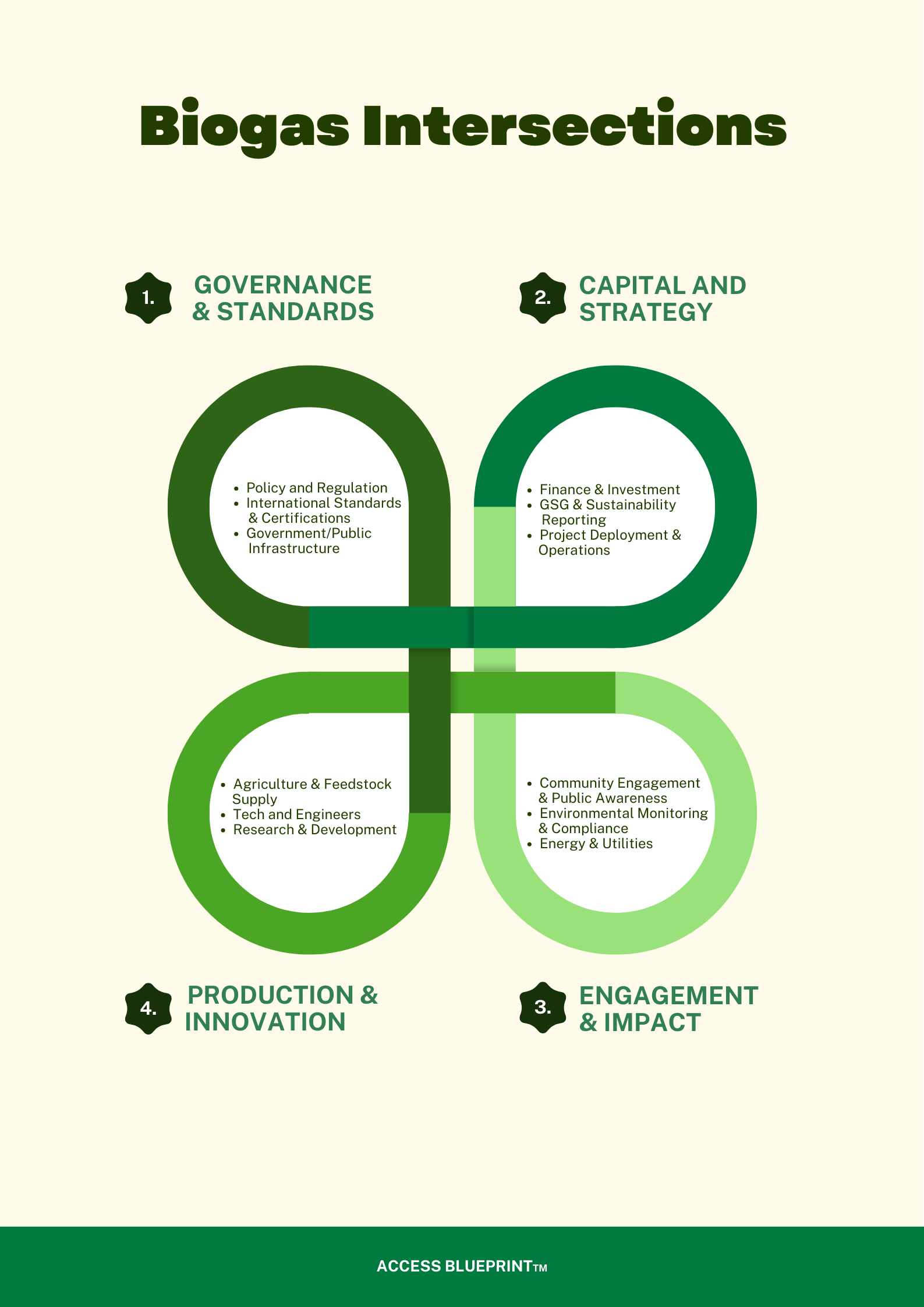
Last week I attended an event on Brazil’s biogas ecosystem hosted by the Brazilian Chamber of Commerce in GB. I went because I focus on how complex systems function across industries, and energy is an environment where system dynamics are especially visible.
At one point in the discussion, a panelist said, “If one link in the chain breaks, the entire system shifts.” The comment referred to energy infrastructure, but it also describes how change succeeds or fails in every sector.
In technology, when innovation outpaces policy.
In organizations, when people are asked to change without supporting structures.
In accessibility, when solutions are added on rather than built into design.
In any complex ecosystem, when components evolve faster than coordination.
Different sectors, similar patterns.
What became clear in the room
Throughout the panels and conversations, I paid attention to how people aligned, communicated, and made sense of the issues. Several themes appeared consistently.
People used different language for similar ideas.
Stakeholders agreed on the big picture but not on definitions.
Ambitious goals were discussed without equally ambitious operational planning.
Expertise sat across many individuals, while decision-making sat with very few.
Vision advanced faster than the systems required to support it.
These are not energy-specific issues. They are systemic dynamics that show up in technology, AI, accessibility, policy, education, and any organization attempting transformation.
The opportunities visible through the Access Blueprint
What some might view as friction points, I see as opportunities for redesign. Each tension in the biogas conversation revealed a place where systems work can create real leverage.
Relational Intelligence - There is an opportunity to strengthen communication by creating shared vocabulary, clearer loops of information, and consistent points of connection across roles and sectors.
Cultural Continuity and Transition - Design Legacy habits highlight where strategies lack support. This creates an opening to design transitions that help teams internalize and carry new ways of working.
Futures Thinking and Strategic Tooling - Short-term orientation indicates a gap in planning tools. Scenario mapping and long-term strategy frameworks can help leaders anticipate shifts instead of reacting to them.
Operational Agility and Systems Flexibility - Rigid workflows limit innovation. This is an opportunity to design operations that can adapt to policy changes, technology evolution, and real-world constraints.
Language Systems and Pattern Recognition - Different interpretations of key concepts show where shared mental models are missing. Introducing common definitions, diagrams, and system maps can enable collective clarity.
Collaborative Governance and Networked Decision-Making - Centralized bottlenecks reveal where decision-making needs to expand. More distributed and transparent governance models could unlock expertise and speed.
The broader truth
Across clean energy, technology, accessibility, and organizational change, the same pattern repeats.
You cannot scale without alignment.
You cannot innovate without policy.
You cannot lead without understanding the entire chain.
This event confirmed the direction of my work in systems and change strategy. Transformation does not come from isolated tools or individual expertise. It comes from how the parts of a system connect, communicate, and evolve.
Where my work is focused
I continue to build at the intersection of systems, people, and transformation. When the chain is stronger, progress becomes possible, coordination becomes clearer, and change becomes sustainable.
The Intersection

I’ve spent years working at the intersection of people, process, and systems, from global supply chain projects to large-scale organizational change.
One thing I’ve learned: every sector reveals the same patterns once you know how to look.
Next week, I’m stepping into a room focused on biogas and energy infrastructure. It’s not my home industry, and that’s exactly why I’m going.
When you understand how systems behave, how decisions move, how people resist or adapt, how communication breaks down or aligns, you can walk into any sector and see the gaps clearly.
I’m curious to see:
• how this industry frames complexity
• where they’re aligned and where they’re siloed
• the places where human-centered change and cross-sector strategy could actually help
This might end up becoming the first case study for the next phase of my work.
The Practice Behind the Performance

One night years ago, I went to a local comedy club in NYC. The host came out and said, “We don’t allow recordings, you never know who might show up.”
Then she said: “Ladies and gentlemen, Jerry Seinfeld.”
Jerry walked out, unfolded a small yellow paper, and placed it on the stool. That paper? New material he was still testing. Decades into his career, and still practicing. Still working. Still learning.
That moment came back to me while watching Being Eddie, Netflix’s new documentary on Eddie Murphy.
The film gives us a polished portrait, but underneath it all is something real: Eddie Murphy succeeded through quiet focus and steady craft.
Not perfection.
Not PR.
Practice.
I didn’t need the documentary to convince me he was funny and smart. What stayed with me was his reflection: “At the root of it all, I love myself.”
Hearing him say that hit something in my heart.
Because in a world that often values attention over intention, the lasting work, the work that matters, comes from care, from commitment, and from craft.
So I’m curious:
What’s something you’re still practicing, even after years of doing it?
What keeps you going when the world only sees the finished product?
Let’s talk about the work behind the scenes, the practice behind the performance.
Date: November 20, 2025
The Lesson I Learned From My Dad’s Blank Pages

I don’t live with regrets.
One of the most important lessons my dad ever taught me came after he passed away.
Seven months before he died, he had surgery, touch and go. I sat next to him in the hospital, watching his vitals drop, unsure if he’d make it.
I asked him if there was anything he had always wanted to do but hadn’t.
He said, “I always wanted to paint.”
So I bought him a watercolor book, one of those simple sets with paint and paper in one. I left it for him when he got home.
After he passed, I found the book and flipped through it, hoping to find just one painting.
It was blank.
Page after page, no color, no brush stroke. That moment has stayed with me.
In 2016, I went to UX Camp in DC. I wasn’t sure I had anything important to say. I was nervous. But I remembered the blank pages and I threw my name in to speak.
My one cheerleader that day was Dan Brown thank you for that nudge and your support ever since.
Since then, I’ve spoken on four continents. Not because I’ve always been fearless. But because I never want to live with the kind of regret you can feel in your hands.
If you want to do something, do it.
Start messy. Say the thing. Write the post. Paint the page.
You don’t have to be ready. You just have to be real.
Designing a Book, Designing a World

I’ve learned something about writing books, it’s like designing a product that never fully ends.
You draft, rewrite, edit, delete, edit again… and somewhere between the late nights and too many cups of tea, it finally feels ready.
Today, the physical version of Inclusive Design for a Digital World (Second Edition) officially launches into the world.
This one was written between classes, flights, and moments of doubt.
It carries stories from people I’ve met, questions from students who made me think harder, and lessons I’m still learning myself.
I didn’t write this book to be perfect, I wrote it to be useful.
Thank you to everyone who supported this journey. I hope this edition helps you build, design, and lead with more curiosity, and maybe a little more heart.
Let’s keep designing a digital world that reflects our best intentions, one decision, one design, one day at a time.
The Freedom in Saying “I Don’t Know”

I used to tie my identity to being right.
At work, in relationships, in conversations,being right felt like safety. Like proof that I belonged in the room.
But the more I’ve grown, the more I’verealized how much freedom there is in saying things like:
“I don’t know.”
“I need to think about that.”
“Let me get back to you.”
There’s so much pressure to have an answer instantly, but rushing to be right shuts down learning.
Curiosity keeps the door open
Now I choose learning over performing, reflection over reaction, and clarity over ego.
Letting go of “right” has made me a better thinker, a better collaborator, and honestly, a better human.
What My Students Taught Me

Ten years of teaching.
That’s a decade of assignments, critiques, conversations, and growth. But the greatest lessons didn’t come from the front of the classroom, they came from the students.
Here’s what they’ve taught me:
— We’re all still kids in some way, wanting to be seen, heard, and understood.
— Being open-minded is the start of real learning. Closed minds close doors.
— Technology exhausts them. And yet, by design, they can’t disconnect.
— Play makes learning stick. If joy is missing, curiosity fades.
— And Lo-fi Girl really does help with focus.
If you’ve ever taken a class with me, I’d love to hear:
What’s something you learned, from me, or from yourself, along the way?
Here’s to the learners. You’ve shaped me more than you know.
Clearing Space for What’s Next

Some bridges are meant to burn… let them.
As my oldest brother says, you can build new ones.
I’ve been thinking about this lately - how we hold onto connections and systems that no longer serve us. Out of loyalty. Out of fear. Sometimes because we think it’s all we have. But every bridge that burns clears space for something better.
Something more aligned with who you’re becoming.
In building inclusive, accessible spaces, we learn that sometimes we have to dismantle what’s broken before we can build what’s equitable. The same is true for our careers.
So if a bridge is burning right now, let it. Grieve it. Learn from it. Then keep going and rest when you need to.
What we think is the end is just the beginning.
Don’t lose hope. You’re not starting over. You’re starting wiser.
You Are the Work

You don’t need to be everything to everyone.
You just need to be aligned with yourself.
I spent years trying to prove my value through output, projects, talks, courses, deliverables.
But peace came when I realized...I am the work.
The rest is an expression of that.
Design and Leadership Is a Design Practice

Design and leadership share a truth: both are acts of empathy.
Leadership benefits from empathy, it helps us see perspectives we’d otherwise miss, but it also requires clarity, boundaries, and accountability. The work is in balancing all three.
You can’t design for people you don’t understand.
You can’t lead people you don’t see.
Every great leader is, in a way, a designer, constantly prototyping new ways of working, learning, and connecting.
Leadership is a design practice. #Leadership
Content Design Event in London

Attended a content design event in London last night, still processing everything.
Fopé Jegede (Tesco), Shamili Kovvuru (JPMorgan Chase), Dan Evans (Mastercard) and hosted by eleni demetriou shared some really thoughtful perspectives on where the field is heading.
On AI: There’s important work happening around bias and inclusion, making sure AI tools serve everyone, not just some people. We’re learning that AI reflects our decisions, so we need to be intentional about the guardrails we build.
On systems: Content design systems are evolving beyond organization, they’re becoming knowledge bases and governance frameworks. They’re also how we address content debt in a way that makes sense to our teams and stakeholders.
On skills: The work is shifting toward systems thinking, content modeling, and taxonomy. We’re becoming architects of meaning, thinking about scale and structure differently than before.
One thing that stuck with me: when stakeholders bring AI-generated copy, offering them a better system prompt can be a gentle way to show the value of content design.
The future feels like it’s about making AI more human-centered and purposeful, enhancing what we can do, not replacing the human work.
What are you noticing in your work?
Introducing Access Blueprint!
Announcing Access Blueprint™ - a year-long series delivering weekly insights on accessibility across functional, physical, and digital domains. Our content will explore accessibility in entertainment, education, and beyond. Stay tuned for more details coming soon.

Access Blueprint Log