From Sugarcane to Strategy: What Biogas Teaches Us About Complex Change
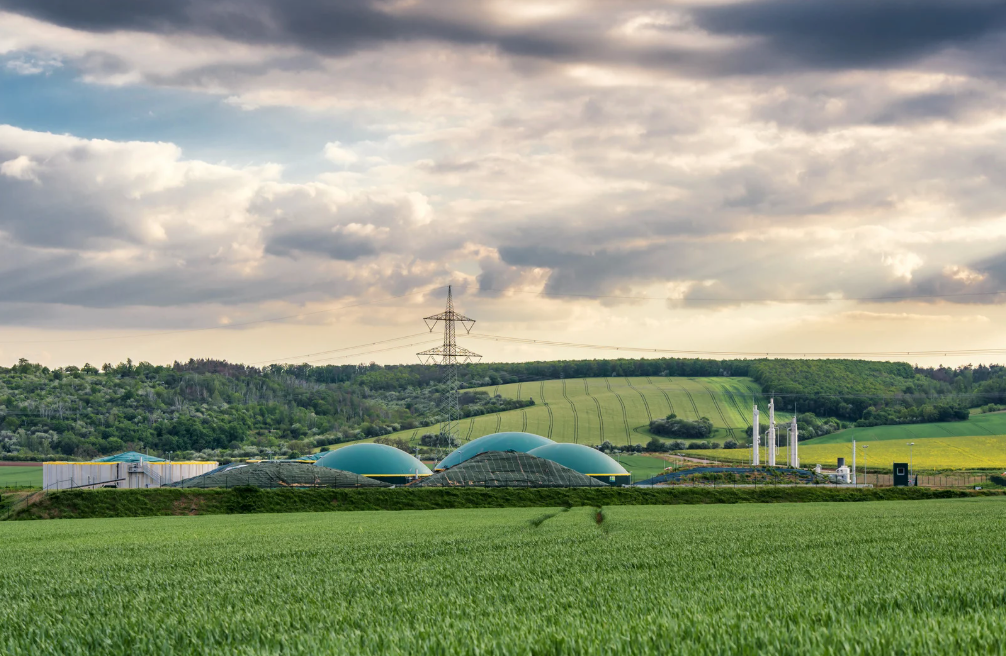
Most people rarely think about biogas, yet it plays a growing role in how economies function. Biogas is not a headline topic, but it sits inside one of the most important questions of our time: how do we fuel economic growth while transitioning to cleaner, more resilient systems. Energy is the backbone of every economy, and the type of fuel a country depends on affects industry, agriculture, logistics, and national strategy. Energy systems shape everything from national strategy to local industry, and influence the pace and direction of its development. When energy changes, economics change with it.
Last week I attended an event on Brazil’s biogas ecosystem hosted by the Brazilian Chamber of Commerce in GB. I went because I focus on how complex systems function across industries, and energy is an environment where system dynamics are especially visible.
At one point in the discussion, a panelist said, “If one link in the chain breaks, the entire system shifts.” The comment referred to energy infrastructure, but it also describes how change succeeds or fails in every sector.
In technology, when innovation outpaces policy.
In organizations, when people are asked to change without supporting structures.
In accessibility, when solutions are added on rather than built into design.
In any complex ecosystem, when components evolve faster than coordination.
Different sectors, similar patterns.
What became clear in the room
Throughout the panels and conversations, I paid attention to how people aligned, communicated, and made sense of the issues. Several themes appeared consistently.
People used different language for similar ideas.
Stakeholders agreed on the big picture but not on definitions.
Ambitious goals were discussed without equally ambitious operational planning.
Expertise sat across many individuals, while decision-making sat with very few.
Vision advanced faster than the systems required to support it.
These are not energy-specific issues. They are systemic dynamics that show up in technology, AI, accessibility, policy, education, and any organization attempting transformation.
The opportunities visible through the Access Blueprint
What some might view as friction points, I see as opportunities for redesign. Each tension in the biogas conversation revealed a place where systems work can create real leverage.
Relational Intelligence - There is an opportunity to strengthen communication by creating shared vocabulary, clearer loops of information, and consistent points of connection across roles and sectors.
Cultural Continuity and Transition - Design Legacy habits highlight where strategies lack support. This creates an opening to design transitions that help teams internalize and carry new ways of working.
Futures Thinking and Strategic Tooling - Short-term orientation indicates a gap in planning tools. Scenario mapping and long-term strategy frameworks can help leaders anticipate shifts instead of reacting to them.
Operational Agility and Systems Flexibility - Rigid workflows limit innovation. This is an opportunity to design operations that can adapt to policy changes, technology evolution, and real-world constraints.
Language Systems and Pattern Recognition - Different interpretations of key concepts show where shared mental models are missing. Introducing common definitions, diagrams, and system maps can enable collective clarity.
Collaborative Governance and Networked Decision-Making - Centralized bottlenecks reveal where decision-making needs to expand. More distributed and transparent governance models could unlock expertise and speed.
The broader truth
Across clean energy, technology, accessibility, and organizational change, the same pattern repeats.
You cannot scale without alignment.
You cannot innovate without policy.
You cannot lead without understanding the entire chain.
This event confirmed the direction of my work in systems and change strategy. Transformation does not come from isolated tools or individual expertise. It comes from how the parts of a system connect, communicate, and evolve.
Where my work is focused
I continue to build at the intersection of systems, people, and transformation. When the chain is stronger, progress becomes possible, coordination becomes clearer, and change becomes sustainable.